




















IP Ratings for Bathroom Lighting: Understanding Safety Zones
Understanding IP Ratings
A comprehensive guide to IP ratings and bathroom lighting zones to help you choose the right fixtures for safe installation.
What is an IP Rating?
IP (Ingress Protection) ratings are a standardised system that tells you how well a lighting fixture is protected against solid objects and liquids. The rating consists of two digits, each with a specific meaning.
First Digit
Solid Object Protection
Indicates the level of protection against solid objects like dust, dirt, and physical contact.
•0 – No protection
•1 – Protected against objects >50mm
•2 – Protected against objects >12.5mm (fingers)
•3 – Protected against objects >2.5mm
•4 – Protected against objects >1mm
•5 – Dust protected
•6 – Dust tight
Second Digit
Liquid Protection
Indicates the level of protection against water and moisture ingress.
•0 – No protection
•1 – Protected against dripping water
•2 – Protected against dripping water (15° tilt)
•3 – Protected against spraying water
•4 – Protected against splashing water
•5 – Protected against water jets
•6 – Protected against powerful water jets
•7 – Protected against temporary immersion
•8 – Protected against continuous immersion
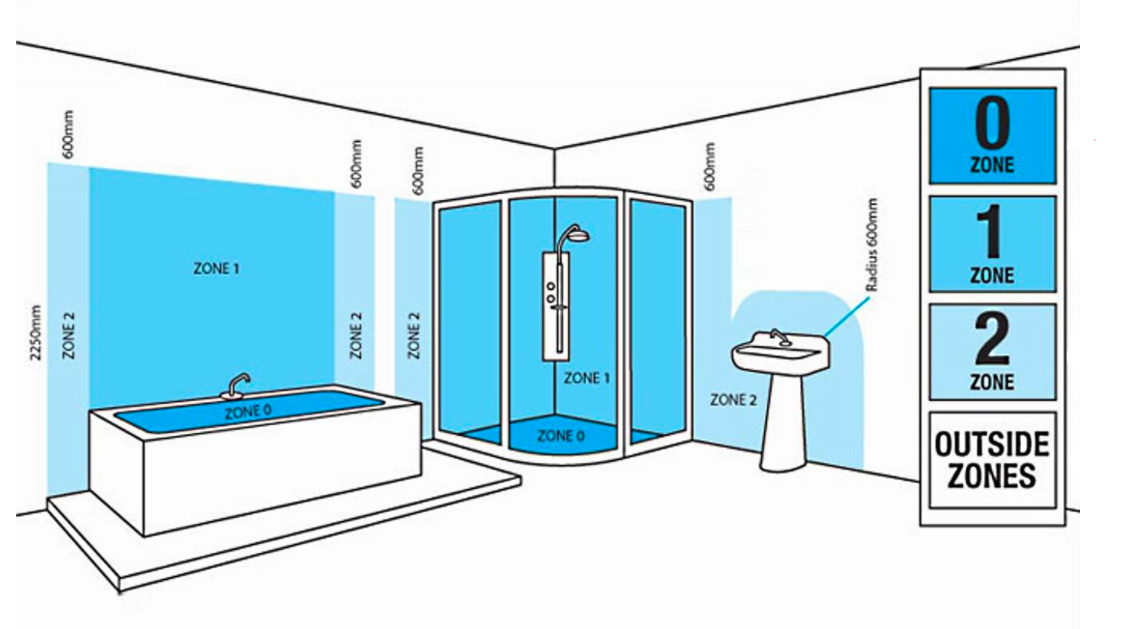
Bathroom Lighting Zones Explained
Bathrooms are divided into specific zones based on proximity to water sources. Each zone has different safety requirements for electrical fixtures.
Zone 0
Inside the bath or shower
The interior of the bath or shower tray, including the space directly above it up to the shower head.
Required: IP67 minimum (total immersion proof). Only low voltage (12V) fixtures permitted.
Zone 1
Above the bath or shower
The area directly above the bath or shower, extending to a height of 2.25m from the floor.
Required: IP45 minimum (protected against water jets from any direction).
Zone 2
Around the bath or shower
The area extending 0.6m horizontally from the perimeter of the bath or shower, up to a height of 2.25m from the floor.
Required: IP44 minimum (protected against splashing water from any direction).
Zone 3
Everywhere else in the bathroom (Outside zones)
Any area outside of zones 0, 1, and 2. This includes areas beyond 0.6m from the bath/shower and above 2.25m height.
No IP rating required. Standard electrical fixtures are safe to use. This is where meraki. lights can be installed.
All meraki. lights
What IP20 means
An IP20 rating means our lighting fixtures are:
Protected against solid objects larger than 12.5mm
Such as fingers, preventing accidental contact with internal components.
Not protected against water
These fixtures should not be exposed to moisture, splashes, or humid conditions.
This makes them ideal for dry areas throughout your home, including bedrooms, living rooms, hallways, and dry areas of bathrooms.
Where to use meraki. lights
Understanding where you can safely install IP20 fixtures ensures both compliance with electrical regulations and the longevity of your lights.
Safe to use
- ✓Bedrooms
- ✓Living rooms
- ✓Dining rooms
- ✓Hallways and corridors
- ✓Home offices
- ✓Kitchens (away from sinks)
- ✓Bathroom Zone 3 areas
Not safe to use
- ✕Inside or above baths/showers (Zone 0 & 1)
- ✕Within 0.6m of bath/shower (Zone 2)
- ✕Outdoor locations
- ✕Areas prone to splashing
- ✕High-humidity environments
- ✕Saunas or steam rooms
- ✕Near swimming pools
Frequently asked questions
Yes, but only in Zone 3 areas. Zone 3 includes any area more than 0.6m from the perimeter of the bath or shower, and areas above 2.25m from the floor. This typically includes areas near the vanity, by the door, or in the centre of larger bathrooms away from water sources.
Installing IP20 fixtures in wet zones (0, 1, or 2) is dangerous and violates electrical safety regulations. Exposure to water can cause electrical shock, short circuits, or damage to the fixture. It also voids any manufacturer warranty. Always consult with a qualified electrician if you’re unsure about safe installation locations.
Measure horizontally from the outer edge of your bath or shower tray. Zone 2 extends 0.6 metres (approximately 60cm or 24 inches) from this point. Any area beyond this distance and not above the bath/shower is considered Zone 3, where IP20 fixtures are safe to use. When in doubt, err on the side of caution and keep fixtures further away from water sources.
Yes, IP20 lights work well in kitchens, provided they’re installed away from direct water sources like sinks, taps, and dishwashers. Keep fixtures at a safe distance from areas where splashing might occur. For above-sink installations, consider fixtures with higher IP ratings.
No, never use water directly on IP20 fixtures. Clean them when switched off using a dry or very slightly damp soft cloth. Avoid any cleaning products that might drip or spray onto the fixture. Always ensure the cloth is wrung out thoroughly if damp.
Outdoor lighting requires a minimum of IP44 rating, though IP65 or higher is recommended for full weather protection. Our IP20 fixtures are designed exclusively for indoor use in dry locations and should never be installed outdoors.
Yes, excessive steam and moisture can damage IP20 fixtures over time. This is why they cannot be used in Zones 0, 1, or 2. In Zone 3 areas with good ventilation, IP20 fixtures should be fine, but ensure your bathroom has adequate ventilation to prevent moisture buildup.
While you can identify zones using the measurements provided on this page, we always recommend consulting with a qualified electrician for safe installation. They can assess your specific bathroom layout, ensure compliance with local electrical regulations, and install fixtures safely.
Ready to light your space?
Browse our collection of IP20-rated brass lighting or get in touch if you need guidance on the right fixtures for your space.


